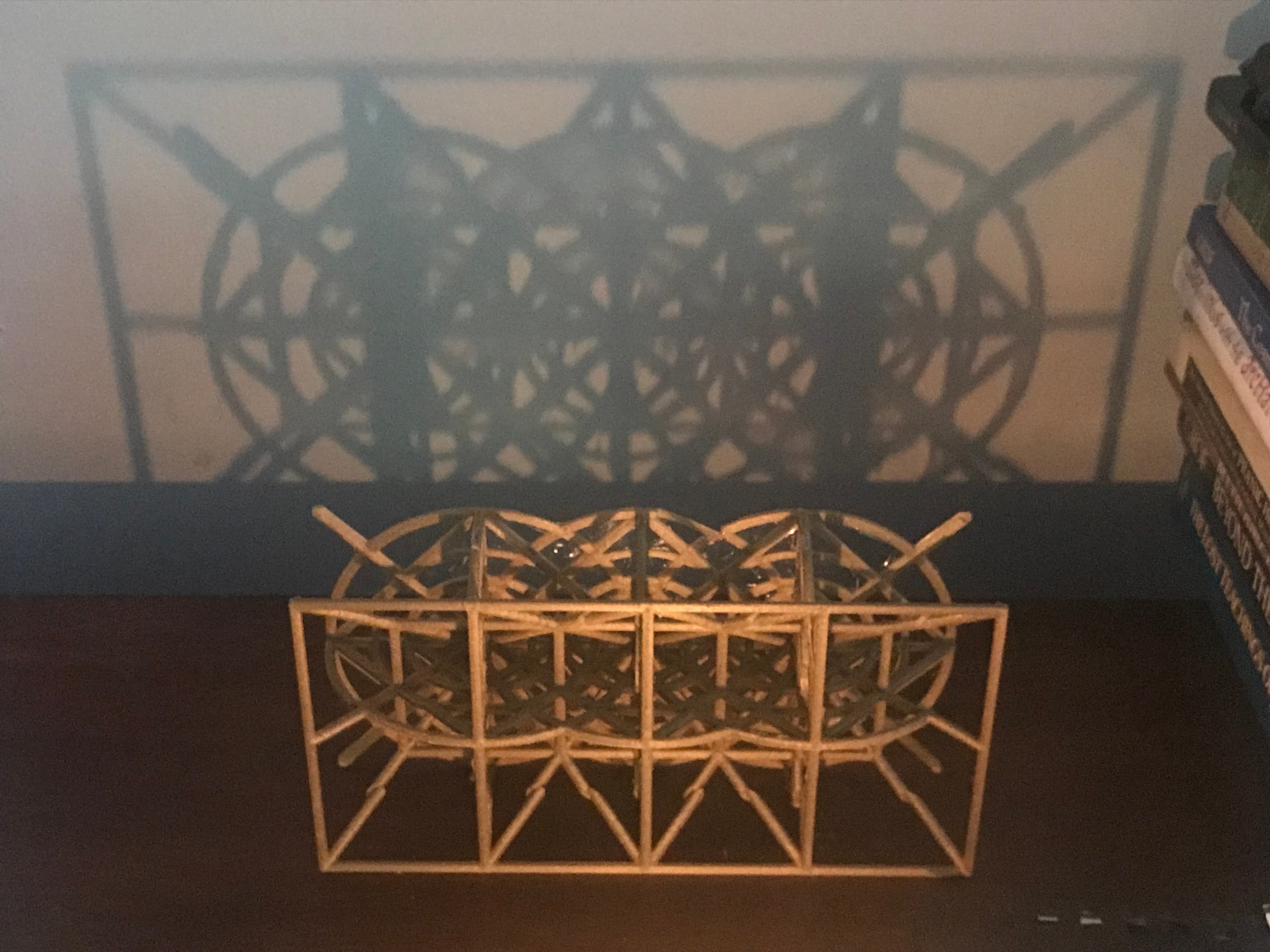
2022 · 3D-printed resin, steel base
Trinity
Three forms, one system. The shift from duality to triplicity — the third point that resolves the tension between two opposites into a higher-order coherence.
AR Experience
Scan any face of this sculpture with the Living Duality app to reveal the digital dimension — animated field lines, rotating hypercubes, and the Unity Pixel in motion.
About the Work
Living Duality is named for the tension between opposites. But the collection knows that duality is not the final word.
The Trinity introduces the third — the point that completes the opposition, that transforms a binary into a ternary, that resolves two competing truths into a higher-order coherence. This is the move that Hegel called synthesis, that the alchemists called the Third Thing, that Walter Russell described as the invisible fulcrum of every apparent polarity.
Three geometric forms, related by precise angular relationships, create a field between them that none produces alone. The piece has no front or back — every viewing angle is equally primary. It can be approached from 360 degrees and every approach reveals a different relationship between the three elements, a different configuration of the field they share.
The Trinity is the philosophical counterpart to the 2 Cubes: where that piece explores the minimum conditions for relationship, this one explores the minimum conditions for resolution. Two things create tension. Three things create a world.
Informed by Brant Hindman's studies at Naropa University — where Tibetan Buddhist philosophy, Jungian psychology, and systems theory converge — the Trinity carries the weight of multiple traditions that independently arrived at the same geometric conclusion: that coherence requires three.